
AI Agents in eCommerce: Hype or Competitive Advantage?
In the constantly evolving world of digital commerce, the integration of artificial intelligence has sparked significant discussions across the retail landscape. Among the most prominent innovations is the AI agent for retail and ecommerce, which has rapidly shifted from being a futuristic idea to a practical and often indispensable business tool. But with so much buzz surrounding AI agents, one can't help but ask: Are these systems genuinely transformative, or are they just overhyped tech fads?
This blog explores the true impact of AI agents in retail and ecommerce, separating the hype from the actual advantages they offer. Through real-world examples, data-backed insights, and strategic analysis, we reveal how businesses are using AI agents to not just keep up with the competition, but to gain a critical edge.
What is an AI Agent for Retail and Ecommerce?
An AI agent for retail and ecommerce is a digital assistant powered by machine learning, natural language processing, and predictive analytics. These agents are capable of interacting with customers across multiple channels, analyzing behavior, offering personalized recommendations, and performing support functions in real time.
Unlike traditional chatbots, AI agents are far more intelligent, adaptable, and integrated into the customer journey. From pre-sale product discovery to post-purchase support, they offer end-to-end engagement that mimics human conversation and decision-making processes.
The Growing Hype Around AI Agents
Over the past few years, there's been a surge in interest and investment in AI agents. Major tech companies and eCommerce platforms tout their AI capabilities as game-changers, and it’s easy to see why. The promises include:
- Automated 24/7 customer service
- Hyper-personalized product recommendations
- Reduction in cart abandonment
- Improved customer loyalty
- Enhanced operational efficiency
While these outcomes sound impressive, businesses must critically evaluate the implementation, scope, and sustainability of these technologies.
Competitive Advantages of AI Agents in Retail and Ecommerce
Now, let’s explore the tangible advantages AI agents bring to the table:
1. Always-On Customer Support
AI agents ensure customers receive assistance 24/7. Whether it’s midnight product queries or return requests, AI agents can handle thousands of interactions simultaneously with speed and accuracy. This dramatically reduces wait times and increases customer satisfaction.
2. Hyper-Personalization
Using customer data from past purchases, browsing behavior, and preferences, AI agents deliver personalized experiences that make customers feel valued. Recommendations are no longer generic; they are tailored to individual needs.
3. Smarter Search and Navigation
AI-powered search agents help users find products through natural language queries or even image uploads. This feature minimizes friction and enhances the overall shopping experience.
4. Data-Driven Decision Making
By analyzing massive datasets in real time, AI agents can provide actionable insights into customer behavior and inventory management. Retailers can adjust pricing, stock levels, and promotions based on predictive trends.
5. Scalable Customer Interaction
During peak seasons, human agents often struggle with high volumes of inquiries. AI agents scale effortlessly, handling customer requests without compromising quality.
Use Cases of AI Agents Across the Ecommerce Funnel
Awareness Stage:
- AI agents introduce first-time visitors to trending products or sales based on demographic data.
Consideration Stage:
- They help customers compare products, read reviews, and answer detailed queries about specifications.
Purchase Stage:
- AI agents guide users through checkout, apply discount codes, and address last-minute concerns to reduce cart abandonment.
Post-Purchase Stage:
- Agents manage order tracking, returns, and even upsell complementary products based on recent purchases.
Real-World Examples
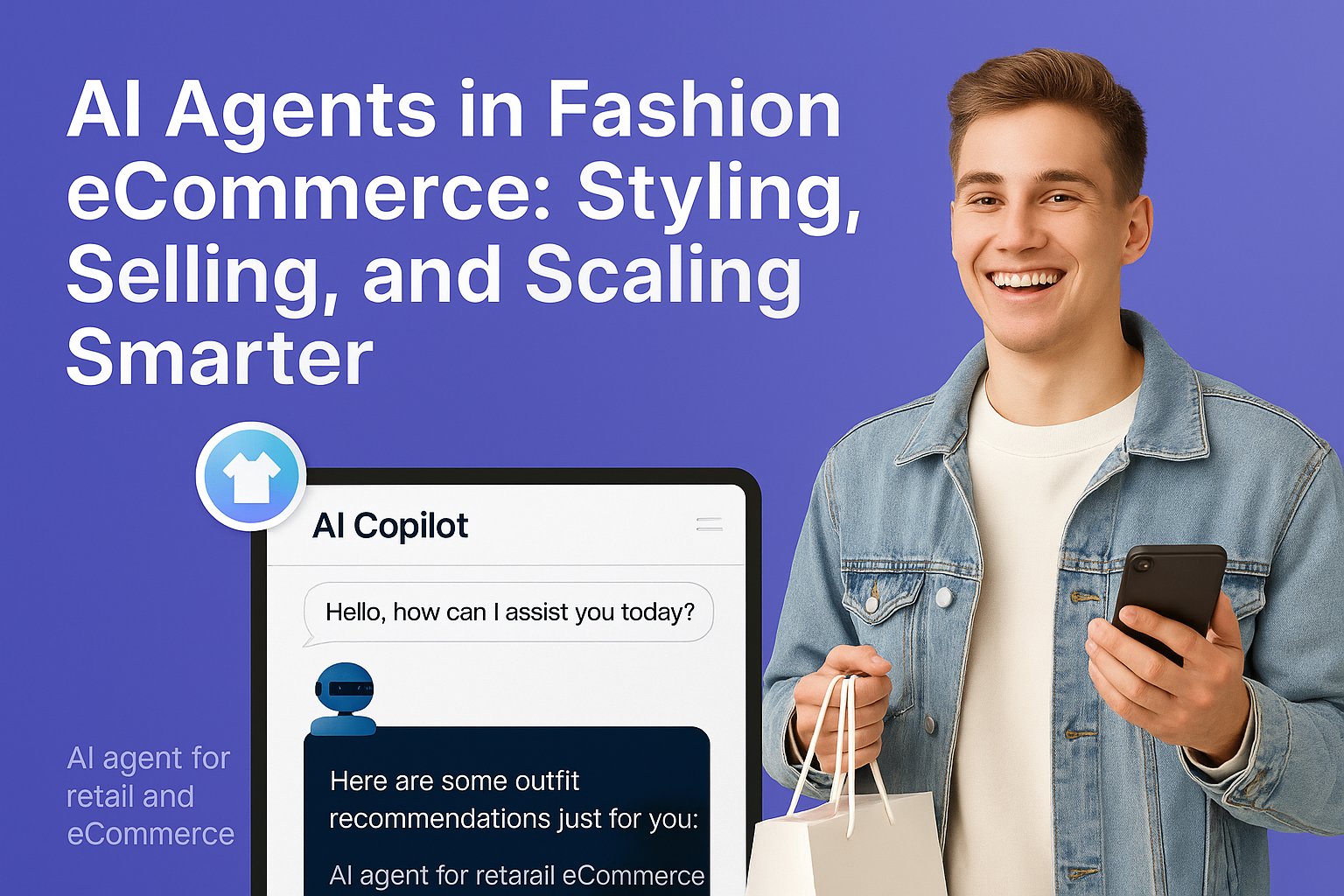
Fashion Retailer: A global apparel brand implemented an AI agent for retail and ecommerce to deliver personalized outfit suggestions based on local weather conditions and fashion trends. Result: 30% increase in average order value.
Electronics Store: An online tech shop integrated AI agents for real-time comparison of products, resulting in a 40% reduction in cart abandonment.
Beauty Ecommerce: AI agents helped customers choose skincare products through interactive quizzes, increasing customer satisfaction and loyalty.
Is It All Hype?
Certainly not. While some companies overstate the capabilities of AI agents, the measurable ROI delivered by these systems is difficult to ignore:
- Up to 70% reduction in customer service costs
- 20-35% improvement in conversion rates
- Higher retention through timely engagement
- Improved brand perception as an innovation leader
These statistics reflect more than just hype. They represent a fundamental shift in how ecommerce businesses operate and interact with consumers.
Challenges to Consider
Of course, integrating AI agents isn’t without hurdles:
- Data Privacy: Handling personal information requires strict compliance with privacy regulations.
- Implementation Costs: Initial setup can be expensive for small businesses.
- Maintenance: AI systems need regular updates and fine-tuning to stay effective.
However, these challenges are increasingly being mitigated through SaaS models and open-source AI solutions.
Industries Benefiting Most from AI Agents
- Fashion & Apparel: Style suggestions, trend updates, size guides.
- Electronics: Feature comparisons, FAQs, troubleshooting.
- Home Decor: Visualization tools, room planners.
- Beauty & Skincare: Virtual try-ons, personalized regimens.
- Grocery: Smart shopping lists, reordering based on frequency.
The Future Outlook
The future of AI agents in ecommerce is bright. With continued advancements in generative AI, voice recognition, and AR/VR technologies, the scope of AI agents will expand beyond textual conversations.
For example, AI agents integrated with smart mirrors or voice assistants could soon become standard in virtual stores. AI-generated product descriptions and dynamic pricing models will further refine user experience.
Final Verdict: Hype or Competitive Advantage?
AI agents for retail and ecommerce are not a fleeting trend—they are a foundational component of future-ready commerce. Businesses that adopt these systems early stand to gain a significant edge in personalization, operational efficiency, and customer loyalty.
Whether you're a startup or a large-scale retailer, investing in AI agents is no longer optional. It's a strategic move to remain competitive in a crowded and constantly evolving market.
Key Takeaways
- AI agents offer real-time, personalized engagement that improves conversions.
- They're scalable, efficient, and reduce operational costs.
- Real-world examples show tangible ROI and enhanced customer satisfaction.
- Despite challenges, the benefits far outweigh the risks.
So, are AI agents in ecommerce a hype or a competitive advantage?
The answer is clear: they are a powerful differentiator in an increasingly digital world.
Stay ahead, stay smart, and embrace the AI revolution in retail.

Write a comment ...